
Entry in Best Cars for New Drivers to Insure
What Makes a Car Cheap to Insure
The specific vehicle attributes insurers price—loss history, repair cost, horsepower, size, theft—and how to use them when choosing a first car.

By Caleb Hartman · Staff Writer
Published · Updated
Answer in brief
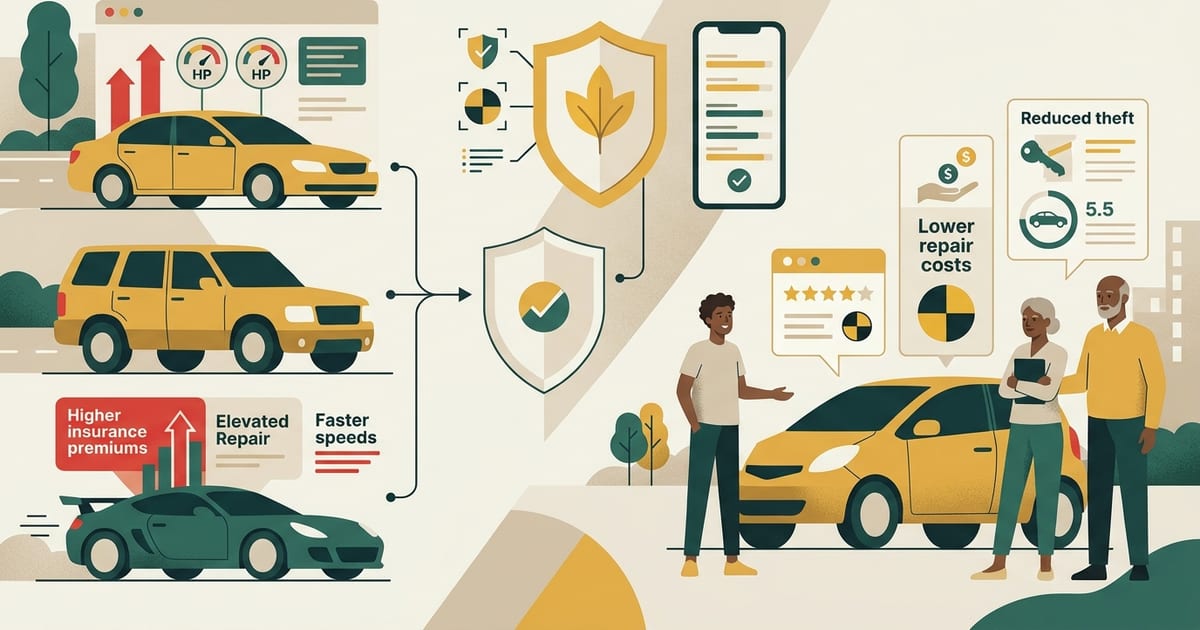
Insurers price a vehicle on its claims history, repair cost, performance, size and theft rate, summarised in a rating symbol that drives the collision and comprehensive premium. The cheapest cars to insure are usually unremarkable: mid-size sedans and small SUVs with modest engines, good crash ratings and common parts. Checking the insurance cost of a specific vehicle before buying is the single most useful step a new driver can take.
The rating symbol
Most insurers assign each make/model/year a numeric symbol derived from its actual claim experience and its original cost. A higher symbol means higher collision and comprehensive premiums. Two cars with the same sticker price can have very different symbols if one is crashed more often, stolen more often or costs more to repair.
The attributes behind the symbol
- Collision loss frequency and severity — how often the model is in claims and how much they cost.
- Repair complexity — sensors, cameras, aluminium panels, LED assemblies.
- Horsepower-to-weight — performance models are both crashed more and cost more to fix.
- Occupant protection — good crash ratings lower injury claims under medical and UM coverages.
- Theft — some models are targeted; comprehensive premiums reflect it.
Using this when shopping
Shortlist two or three candidates and quote each with the new driver listed before negotiating a purchase. The quotes often reorder the list. The broader guide to cars for new drivers has the profile to aim for.
Terms: Vehicle rating symbol, Collision coverage, Comprehensive coverage
Sources and references
Legal figures on this page (minimum limits, filing periods, statutory benefits) are checked against the primary law or the state insurance regulator listed below. Links and figures last verified Nov 2026.
- Insurance losses by make and model — Highway Loss Data InstituteStatistical dataRelative claim frequency and severity by vehicle under collision, property damage, comprehensive, PIP, MedPay and bodily injury coverages.
- Vehicle ratings — Insurance Institute for Highway SafetyStatistical dataCrashworthiness and crash-avoidance ratings by make and model.
- How much auto coverage do I need? — Insurance Information InstituteConsumer guidanceWhy state minimums are a floor; choosing liability limits that protect assets; when collision and comprehensive are worth keeping.
Practical guidance on this page is original editorial work. Cited sources support factual statements and do not endorse this site. Dollar ranges described as typical or illustrative are editorial estimates, not figures from these sources.