
Guide
How Much Car Insurance Costs for New Drivers
What new drivers pay for car insurance by age, why inexperience is priced so heavily, and how the premium falls over the first three years.

By Priya Raman · Editor
Published · Updated
Answer in brief
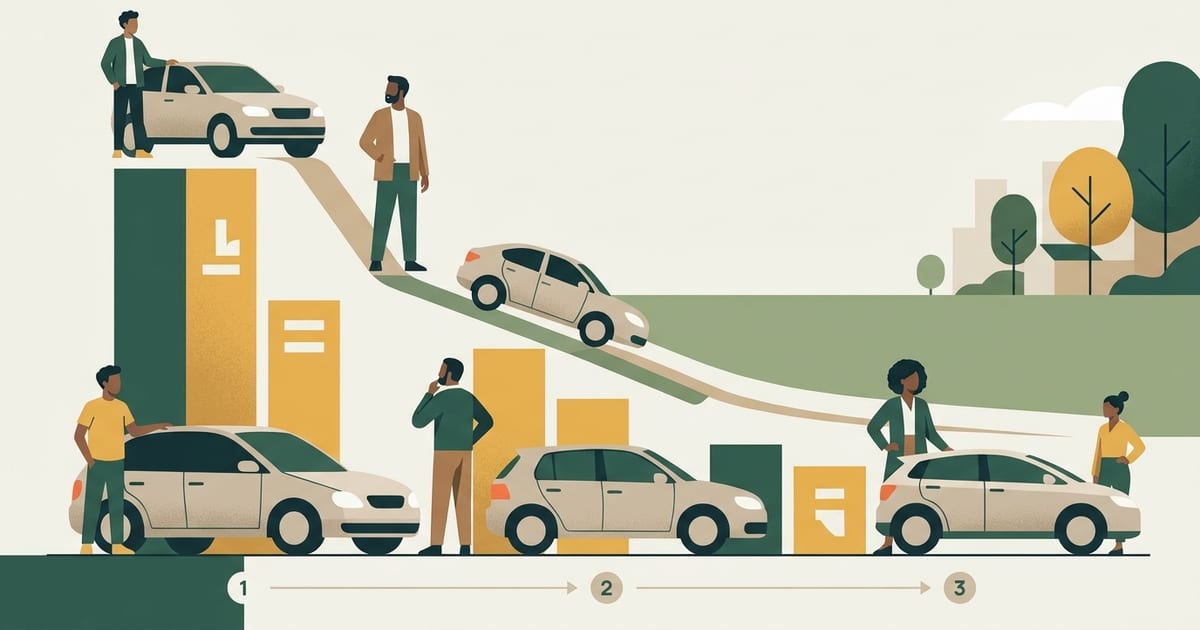
A new driver pays more than an experienced one at any age, but how much more depends mostly on age. A newly licensed 16-year-old added to a parent's policy commonly adds $1,500–$3,000 a year; a 16-year-old on their own policy can exceed $5,000. A newly licensed 30-year-old typically pays 20–40% above an experienced driver of the same age—a much smaller gap. The inexperience component of the premium falls steadily and is largely gone after three years of licensed, claim-free driving.
Why inexperience costs so much
Insurers price from claims data, and the data on newly licensed drivers is unambiguous: crash rates per mile are highest in the first months of driving and fall sharply with experience. Highway-safety research shows 16- and 17-year-old drivers have crash rates several times those of drivers in their twenties, and the first year of driving is the riskiest at any age. Insurers translate that into an inexperienced operator factor applied on top of age.
Typical premiums by age at licensing
| New driver | Added to parents' policy | Own policy |
|---|---|---|
| 16 | +$1,800–$3,200 | $4,500–$7,000 |
| 18 | +$1,400–$2,600 | $3,500–$5,500 |
| 21 | +$900–$1,600 | $2,400–$3,800 |
| 25 | n/a (usually own policy) | $1,900–$2,900 |
| 35 (newly licensed) | n/a | $1,600–$2,400 |
Two patterns stand out. First, the gap between a parent's policy and a separate policy is large for teenagers, which is why staying on a parent's policy is almost always cheaper when it is allowed. Second, an adult who learns to drive at 30 pays an inexperience surcharge but not a youth surcharge, so the premium is far closer to normal.
What else moves the number
- Vehicle. A ten-year-old sedan with good crash ratings can cost half as much to insure as a new sports coupe. See best cars for new drivers.
- Coverage. Liability-only on an older car vs full coverage on a financed one is often a $1,000+ difference.
- Location. Urban territories cost more at every age.
- Discounts. Good student, driver training and telematics discounts are designed for exactly this group. See discounts for new drivers.
- Insurer. Companies weight inexperience very differently. The spread between quotes for a new driver is wider than for almost any other profile.
Quote finder
Find auto insurance quotes that fit your situation
How quickly it falls
The inexperience factor typically steps down at each renewal and is gone after three years with a clean record. For teenagers, the age factor continues to fall until the mid-twenties. The how rates drop guide shows the timeline and the decisions that speed it up.
Entries in this guide
Specific questions answered in more depth.
Questions & answers
Why is a new driver's insurance so expensive?
Because newly licensed drivers have the highest crash rates per mile of any group, and insurers price the first years of driving accordingly.
Is insurance cheaper for a new driver who is older?
Yes, substantially. An inexperienced 35-year-old pays an inexperience surcharge but not the youth surcharge that dominates a teenager's premium.
How long am I considered a new driver?
Most insurers apply inexperienced-operator rating for about three years from the date you were first licensed.
Terms used in this guide
- Inexperienced operator
- An insurer's rating classification for a driver licensed fewer than about three years, applied at any age in addition to the age factor.
- Rating factor
- Any characteristic used to set a premium: age, years licensed, record, vehicle, territory, mileage, coverage choices.
- Premium
- The price of a policy, usually quoted per six or twelve months.
- Base rate
- The starting premium for a coverage in a given territory before individual factors are applied.
Sources and references
Legal figures on this page (minimum limits, filing periods, statutory benefits) are checked against the primary law or the state insurance regulator listed below. Links and figures last verified Nov 2026.
- Teenagers — Insurance Institute for Highway SafetyIndependent researchTeen crash risk, graduated driver licensing research and vehicle recommendations for young drivers.
- Graduated licensing laws by state — Insurance Institute for Highway SafetyIndependent researchState-by-state learner, intermediate and full-licence ages, night-driving and passenger restrictions.
- Facts + Statistics: Teen drivers — Insurance Information InstituteStatistical dataCrash and fatality statistics for drivers 16–19 and graduated licensing context.
- Fatality facts: Teenagers — Insurance Institute for Highway Safety (2024)Statistical dataFatal crash rate per mile driven for 16–19-year-olds is just over 3 times the rate for drivers 20 and older (2022 travel data); all-severity crash rate is over 4 times; risk is highest at 16–17.
- Drivers in fatal motor vehicle crashes by age, 2023 — Insurance Information Institute (2025)Statistical dataFatal-crash involvement per 100,000 licensed drivers: 42.40 (16–20), 35.34 (21–24), 28.97 (25–34), 24.18 (35–44), 21.70 (45–54), 19.45 (55–64), 15.44 (65–74), 16.63 (75+).
- What determines the price of an auto insurance policy? — Insurance Information InstituteConsumer guidanceRating factors: driving record, mileage, location, age, gender, vehicle, credit-based insurance score, coverage choices. Notes ZIP-code rating is prohibited in California and Michigan and gender rating is prohibited in seven states.
- How much auto coverage do I need? — Insurance Information InstituteConsumer guidanceWhy state minimums are a floor; choosing liability limits that protect assets; when collision and comprehensive are worth keeping.
- Auto insurance for teen drivers — Insurance Information InstituteConsumer guidanceAdding a teen to a parent's policy versus a separate policy; good-student and driver-training discounts; vehicle choice.
Practical guidance on this page is original editorial work. Cited sources support factual statements and do not endorse this site. Dollar ranges described as typical or illustrative are editorial estimates, not figures from these sources.
Guide
Own Policy vs Parents' Policy for a New Driver
When a new driver should be added to a parent's policy, when a separate policy makes sense, and how vehicle ownership and address affect the answer.
Guide
How Fast Car Insurance Rates Drop for New Drivers
The year-by-year path from a first-policy premium to a normal one: inexperience factors, age bands, and the renewals where comparing pays most.
Guide
Car Insurance Discounts for New Drivers
Good student, driver training, telematics, distant student and other discounts that specifically reduce new-driver premiums—with realistic ranges.